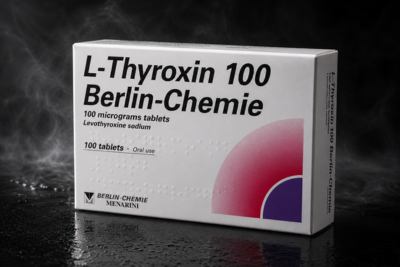
L-Thyroxin 100 Berlin-Chemie – Levothyroxine 100 mcg, 100 Tablets
£17.99
L-Thyroxin 100 Berlin-Chemie is a 100 mcg levothyroxine sodium tablet medicine. This page covers product identity, T4 pharmacology, levothyroxine use in the UK, absorption, thyroid-function monitoring, product switching, safety and manufacturer information.
L-Thyroxin 100 BERLIN-CHEMIE
This page identifies the listed BERLIN-CHEMIE levothyroxine presentation and explains its active ingredient, strength, pack, thyroid-hormone context, administration considerations, monitoring and UK-facing information.
What is levothyroxine?
Levothyroxine is a synthetic form of thyroxine, commonly called T4. T4 is one of the principal thyroid hormones and is converted in tissues to active T3. The effects of levothyroxine depend on dose exposure, absorption, individual physiology and time.
T4 is long acting
Levothyroxine has a relatively long biological time course. Changes can take time to reach a new steady state, which is one reason thyroid treatment is normally assessed over time rather than by immediate subjective effects.
Conversion to T3
T4 acts partly as a circulating precursor that can be converted to T3 in tissues. Conversion varies between individuals and can be affected by illness, nutrition and other factors.
Consistency matters
Because absorption can vary, consistent administration conditions are important when levothyroxine is being used in a clinical context.
Food, supplements and other medicines can affect absorption
Levothyroxine absorption is sensitive to timing and gastrointestinal conditions. Individual instructions from a healthcare professional and the current patient/product information should take priority.
Food & drinks
Food and some drinks can alter absorption. NHS patient information commonly emphasises consistent timing and separation from breakfast or caffeinated drinks according to the individual instructions provided.
Calcium & iron
Calcium, iron and some other supplements or medicines can reduce levothyroxine absorption when taken too close together.
Other medicines
Acid-suppressing medicines, certain binding agents and other treatments can affect absorption or thyroid-hormone requirements. Medication history matters.
Why thyroid-hormone exposure is usually interpreted with symptoms and blood tests
Thyroid symptoms can be non-specific, and excessive or insufficient thyroid-hormone exposure can affect many systems. Laboratory measurements and clinical context are therefore important when levothyroxine is used therapeutically.
- Thyroid-stimulating hormone (TSH) and thyroid-hormone measurements can help assess treatment in appropriate clinical settings.
- Palpitations, tremor, sweating, anxiety, sleep disturbance and other symptoms can occur with excessive thyroid-hormone effect.
- Cardiovascular history, other endocrine conditions, pregnancy status and other medicines can affect individual risk and treatment decisions.
- Body weight, temperature or subjective energy alone are not reliable substitutes for appropriate thyroid assessment.
- Severe chest pain, fainting, marked shortness of breath or rapidly worsening symptoms require urgent medical assessment.
Checking the BERLIN-CHEMIE presentation
Use multiple product details when assessing the listed presentation: manufacturer, active ingredient, strength, pack quantity, batch/lot information, expiry, leaflet and packaging condition.
Manufacturer
BERLIN-CHEMIE is the manufacturer stated for this L-Thyroxin presentation.
100 mcg strength
The listed tablet contains 100 micrograms of levothyroxine. Similar-looking products can contain different strengths, so the strength label is a key check.
Presentation vs status
Packaging and provenance help identify the product but do not by themselves establish the legal classification, licensing position or individual suitability in a destination country.
UK-facing levothyroxine context
Levothyroxine is widely used in thyroid care, but product-specific legal status and supply requirements should be checked using current official information for the exact product and jurisdiction. A BERLIN-CHEMIE presentation from another market should not automatically be assumed to have the same regulatory status as a UK-authorised presentation.
Common questions about L-Thyroxin 100
What is the active ingredient?
The listed L-Thyroxin 100 product contains levothyroxine sodium, a synthetic form of T4.
What strength is each tablet?
The listed strength is 100 micrograms of levothyroxine per tablet.
How many tablets are in the pack?
The listed presentation contains 100 tablets.
Is T4 the same as T3?
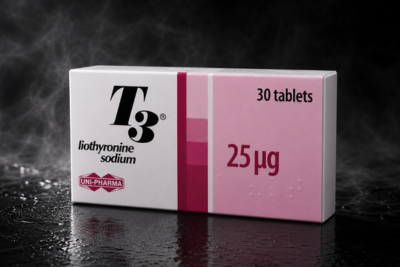
No. T4 is thyroxine/levothyroxine and is converted in tissues to T3. T3/liothyronine is the more active thyroid hormone and has a different time course.
Why does timing with food and supplements matter?
Food, calcium, iron and some medicines can alter levothyroxine absorption, which can change thyroid-hormone exposure even if the tablet strength is unchanged.
Information notice: product information is provided for identification and general education. It does not replace the manufacturer’s current documentation, official regulatory information or individual medical advice.
MAECENAS IACULIS
Vestibulum curae torquent diam diam commodo parturient penatibus nunc dui adipiscing convallis bulum parturient suspendisse parturient a.Parturient in parturient scelerisque nibh lectus quam a natoque adipiscing a vestibulum hendrerit et pharetra fames nunc natoque dui.
ADIPISCING CONVALLIS BULUM
- Vestibulum penatibus nunc dui adipiscing convallis bulum parturient suspendisse.
- Abitur parturient praesent lectus quam a natoque adipiscing a vestibulum hendre.
- Diam parturient dictumst parturient scelerisque nibh lectus.
Scelerisque adipiscing bibendum sem vestibulum et in a a a purus lectus faucibus lobortis tincidunt purus lectus nisl class eros.Condimentum a et ullamcorper dictumst mus et tristique elementum nam inceptos hac parturient scelerisque vestibulum amet elit ut volutpat.